Charlie Ess’s contribution in The John Hopkins Guide to Digital Media, “Ethics in Digital Media”, touches on the many ethical challenges present in various forms of new media. These obstacles run the gamut from managing data collection on social networking sites to digital research protocols and robot ethics. I am particularly interested in the ethical considerations pertaining to personal data collected by social media platforms, how the transfer of ownership of this data occurs, and what role corporations and regulatory agencies play in these transactions.
As Ess writes, privacy issues related to the use of social networking sites have become increasingly complex. Personal data is voluntarily provided by individuals who subscribe to these platforms, and additional data is continuously fed into these platforms through user-generated content and interactions.
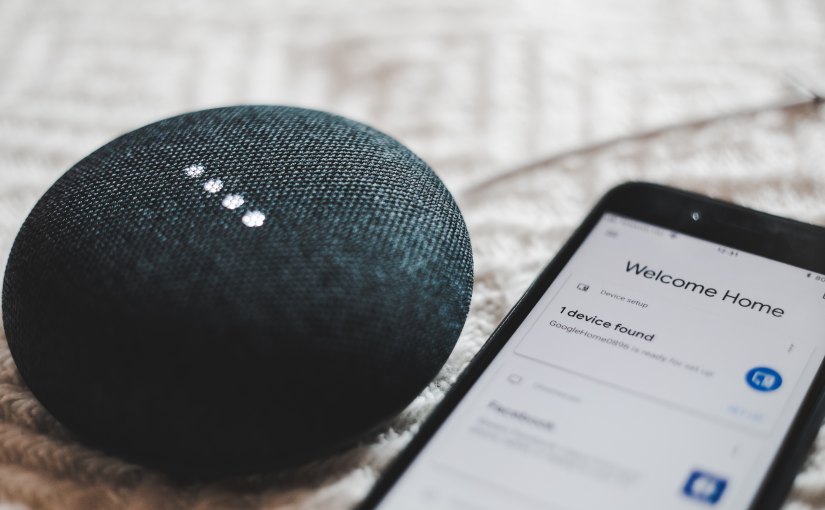
Ess has written extensively about digital media ethics and the impact of self-perception and identity within the framework of computer-mediated communication. Another scholar, Yong Jin Park of Howard University, has written at length about the mechanics and structure of Big Data, the role users play in protecting their own privacy, and the data ecosystem as it supports commercial interests. One example of how both of their research intersects is in personal assistant devices such as Amazon’s Alexa, or Google Home.
Unlike social media accounts which require no financial contribution from the user, these hardware devices are purchased and linked to a user’s accounts. Many of these devices can be linked not only to Amazon and Google Play accounts, but third-party devices such as smart home systems (Nest, Ring, Roomba vacuums). The appeal to the user is the convenience of a centralized command hub, one device to rule over the various other devices and apps controlling aspects of their home and online accounts. Most users consent to the cross-sharing of data between these devices without much thought. As Park has noted, and previous research suggests, actions regarding privacy are often irrational; a person might have concerns about data privacy, but not take any actions to protect themselves, often taking actions that make their data even more vulnerable to collection such as buying a smart home system.
An interesting cross between Ess and Park’s research is how they view identity in this data ecosystem. Park has written that people are open to data collection through online networks because it facilitates their consumption behaviors, which is a defining factor of identity. Ess theorizes that these online networks are a new form of community in which we define ourselves. If both are correct, then it can be said that privacy needs to be redefined completely in a media ecology in which the boundaries between our online and offline behaviors has collapsed.
Ess, Charles. “Ethics in Digital Media.” The Johns Hopkins Guide to Digital Media, Johns Hopkins University Press, 2014, pp. 183–187.
Ess, Charles. “The Embodied Self in a Digital Age.” Nordicom, Gotesborgs Universitet, 2010, http://www.nordicom.gu.se/sites/default/files/kapitel-pdf/319_10%20ess.pdf.
Yong Jin Park, et al. “The Structuration of Digital Ecosystem, Privacy, and Big Data Intelligence.” American Behavioral Scientist, vol. 62, no. 10, Sept. 2018, pp. 1319–1337. EBSCOhost, doi:10.1177/0002764218787863.
 History and Theory of New Media